






 منزل، بيت
 منتجات
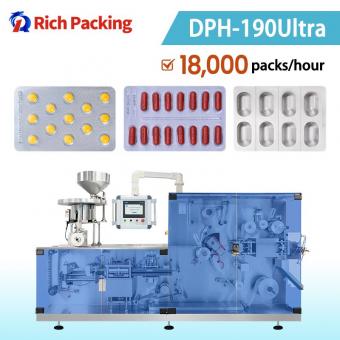
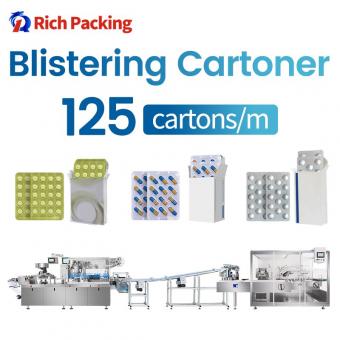
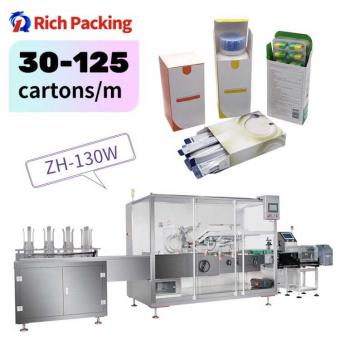
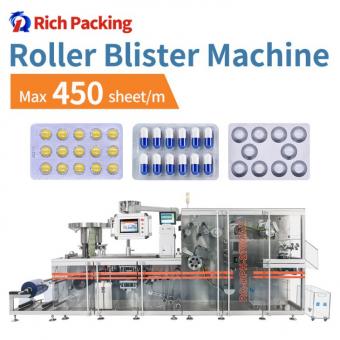
29+ years in pharmaceutical machinery, covering capsule filling, tablet pressing, blister packaging, tablet and capsule counting, cartoning, GMP production, and overseas machine service.

A promising drug product still needs a practical route from formulation to production. If your company lacks the facilities, capacity, or specialist resources for every stage, a CDMO may be an option. But what is a CDMO in pharma, and how does it differ from a CMO or CRO? This guide explains the services CDMOs provide, how to evaluate a potential partner, and what to consider when planning solid-dose manufacturing and packaging.
A contract development and manufacturing organization (CDMO) is a company that provides outsourced development and manufacturing services to pharmaceutical or biotechnology businesses.
A CDMO can help develop a drug product, prepare its manufacturing process, and produce batches for clinical or commercial use. The exact responsibilities depend on the project and the services included in the agreement.
For example, a pharmaceutical company may have a promising formulation but need external support to scale it for production. A CDMO with the right capabilities can help develop the manufacturing process, transfer it to suitable equipment, and produce the required batches.
Not every CDMO handles every stage. Some specialize in active pharmaceutical ingredients (APIs), while others focus on finished dosage forms such as tablets, capsules, or injectable products. The right choice depends on the product, the development stage, and the work the sponsor wants to outsource.
CDMO services can cover development, manufacturing, testing, and packaging. However, a company described as a CDMO may offer only a selection of these services, so the project scope should be confirmed before you choose a partner.
|
Service area |
What a CDMO may help with |
Question to ask |
|
Formulation development |
Develop or refine a formulation for the intended dosage form |
Has the CDMO worked with a similar product and dosage form? |
|
Process development and scale-up |
Develop a manufacturing process and assess its transfer to a larger scale |
Can its equipment support the planned batch size and future production needs? |
|
Analytical development and testing |
Develop or transfer test methods and perform agreed testing |
Which tests are performed in-house, and which are outsourced? |
|
Clinical manufacturing |
Produce material for clinical development, subject to the agreed scope and applicable requirements |
Can the facility support the required batch size, documentation, and timeline? |
|
Commercial manufacturing |
Manufacture approved products at an agreed production scale |
Is the facility suitable for the product and intended market? |
|
Packaging and labeling |
Provide primary or secondary packaging services where available |
Can the CDMO handle the required blister, bottle, carton, and labeling specifications? |
|
Regulatory and quality support |
Provide manufacturing records, quality documentation, and other agreed support |
Who reviews records, handles changes, and approves release? |
For a tablet or capsule project, the transition from development to production deserves particular attention. Equipment used for an early batch may differ from the equipment used for commercial manufacturing. The sponsor and CDMO should therefore discuss batch size, material behavior, equipment capacity, process controls, and the information needed for technology transfer before committing to a production plan.
The same applies to packaging. A CDMO may be able to manufacture capsules but rely on a separate partner for blister packaging or cartoning. Asking where each step will take place helps clarify responsibilities, lead times, and handoffs between suppliers.
For drug manufacturing projects in the United States, the parties should also define quality responsibilities clearly. FDA guidance explains how a quality agreement can document manufacturing activities and responsibilities; assigning a task to a contract facility does not remove either party’s applicable CGMP obligations. FDA guidance on contract manufacturing quality agreements
A CDMO, CMO, and CRO support different parts of pharmaceutical development and production. The main difference is their usual area of focus: a CDMO combines development and manufacturing services, a CMO focuses on manufacturing, and a CRO focuses on outsourced research services.
|
Organization |
Full name |
Main focus |
When a company might use one |
|
CDMO |
Contract Development and Manufacturing Organization |
Development and manufacturing |
You need help developing a formulation or process and producing the product |
|
CMO |
Contract Manufacturing Organization |
Manufacturing |
You have a defined product or process and need external production capacity |
|
CRO |
Contract Research Organization |
Research services |
You need support with research activities, such as planning or managing a clinical trial |
A CMO typically manufactures a product on behalf of another company. A CDMO also offers development capabilities, which may include formulation development, process development, analytical methods, or support with transferring a process to a production site.
For example, if your tablet formulation and manufacturing process are already established, a CMO with suitable equipment and capacity may meet your needs. If the formulation or process still needs development before production, you may look for a CDMO with experience in that dosage form.
These labels are a starting point, not a substitute for reviewing the service agreement. A CMO may offer some development support, and a CDMO may accept a manufacturing-only project. Ask each provider exactly which activities it will perform.
A CRO generally supports outsourced research activities. Depending on its capabilities, this may include clinical trial planning, site management, data management, or other research services.
A CDMO generally focuses on developing and manufacturing the drug substance or finished product. Some organizations offer both types of services, while others work with separate partners. For a project involving multiple providers, clarify who manages each handoff—for example, who supplies clinical trial material and who coordinates its delivery to study sites.
The best choice depends on the work your project still needs, not simply the provider’s label. List the required activities, batch sizes, markets, and timelines first; then compare each provider’s documented capabilities against that list.
A CDMO project does not follow one fixed sequence. Some sponsors need early formulation support; others already have an established process and need help transferring it or increasing production capacity.
A typical project may involve the following stages:
1. Project assessment. The sponsor shares the dosage form, development stage, intended market, target batch size, and required services. The CDMO assesses whether its capabilities and capacity fit the project.
2. Development and planning. If needed, the parties agree on formulation work, process development, analytical methods, and the materials and equipment required.
3. Technology transfer. When a process moves from one team, site, or scale to another, the parties transfer the relevant knowledge, procedures, specifications, and test methods.
4. Manufacturing and testing. The CDMO produces the agreed batches and performs or arranges the testing defined in the project scope.
5. Packaging and release activities. The product is packaged as agreed. Each party completes its assigned quality-review and release responsibilities under the applicable requirements and quality agreement.
The handoffs between stages matter as much as the individual stages. For example, a formulation that works on a small machine may require additional evaluation when transferred to different production equipment. Discussing equipment differences and process risks early can help both parties plan the transfer. Patheon on pharmaceutical technology transfer
A CDMO can provide capabilities that a pharmaceutical company does not have available in-house. The potential benefits depend on the project, the partner, and the terms of the agreement.
A company developing a product may not have the facilities or staff needed for every development and manufacturing step. A CDMO can provide access to relevant equipment, technical experience, and established processes.
However, a CDMO’s general experience is not enough on its own. Ask whether the team has handled a comparable dosage form, material, process, and batch size.
A CDMO can provide external manufacturing capacity when a company is launching a product, increasing output, or managing constraints at an existing site.
Before assuming that capacity is available, confirm production slots, lead times, maintenance schedules, and how the CDMO handles competing customer demand.
Some CDMOs support both development and manufacturing, which can reduce the number of separate providers a sponsor needs to manage. Others specialize in a particular stage or dosage form.
An integrated arrangement may simplify coordination, but it does not automatically eliminate technology-transfer work. The sponsor should still understand where each activity takes place and how information moves between teams.
Outsourcing may reduce the need to invest in facilities or equipment for a specific project. It may also provide access to an experienced team. However, outsourcing is not automatically cheaper or faster: development work, testing, validation, packaging, logistics, and changes can all affect the final cost and schedule.
Request a detailed scope and timeline before comparing proposals.
The best CDMO is one that can demonstrate a fit for your product and project, rather than simply offer the longest service list.
|
Area to evaluate |
What to check |
Example question |
|
Product and dosage form |
Experience with your formulation, material, and dosage form |
Have you manufactured a similar tablet or capsule product? |
|
Development capabilities |
Formulation, process, and analytical support relevant to your project |
Which development activities are included in the proposal? |
|
Equipment and capacity |
Suitable equipment, batch-size range, available slots, and future scale |
What are the minimum and target batch sizes on the proposed equipment? |
|
Quality and documentation |
Quality systems, inspection history, records, and agreed responsibilities |
What documentation will be provided, and who approves each stage? |
|
Technology transfer |
How methods, process knowledge, and specifications will be transferred |
What information do you need from us before transfer begins? |
|
Packaging |
Available primary and secondary packaging formats |
Are blister packaging and cartoning performed on the same site? |
|
Project management |
Named contacts, reporting, escalation, and change handling |
Who will manage the project, and how are delays or changes communicated? |
|
Cost and timing |
Scope, exclusions, milestones, and assumptions |
Which testing, packaging, or transfer activities could add cost or time? |
Ask for evidence appropriate to the project. Depending on your requirements, that may include a capability assessment, relevant inspection information, sample documentation, an equipment list, or a discussion with the technical team.
For equipment-related considerations, see our guide to GMP requirements for pharmaceutical equipment.
For U.S. drug manufacturing, a quality agreement can help document how the sponsor and contract facility divide manufacturing and quality activities. The agreement should be reviewed alongside the applicable regulatory requirements and commercial contract.
A CDMO producing tablets or hard capsules may need equipment for material preparation, tablet compression or capsule filling, inspection, and packaging. The actual configuration depends on the formulation, process, batch size, and pack format.
|
Production or packaging stage |
Equipment that may be involved |
Practical planning question |
|
Tablet production |
Can the press support the required tooling, batch size, and production rate? |
|
|
Capsule production |
Is the machine suitable for the capsule size and the material being filled? |
|
|
Blister packaging |
Blister packaging machine |
Does the machine accommodate the product dimensions and required packaging materials? |
|
Bottle packaging |
Tablet or capsule counting and bottling equipment |
Can the line handle the product and target bottle format? |
|
Secondary packaging |
Cartoning machine |
Can it accommodate the primary pack, leaflet, carton dimensions, and line speed? |
For facilities handling several customer products, changeover and cleaning can be as important as rated output. Ask how parts are changed, what product-contact components are involved, what records are available, and how the proposed equipment fits the facility’s cleaning and qualification approach.
The planned primary pack also affects downstream equipment. A capsule destined for a blister card follows a different packaging route from one counted into a bottle. Define the pack format and interfaces before selecting a complete line.
For more detail, see our pharmaceutical packaging line guide.
CDMO stands for contract development and manufacturing organization. In pharma, it generally refers to a company that provides outsourced development and manufacturing services to another business. The exact services depend on the provider and the project agreement.
A CMO generally focuses on contract manufacturing. A CDMO combines manufacturing with development capabilities, such as formulation or process development. The terms are not a complete description of every provider’s services, so confirm the scope with each company.
A CDMO may work with APIs, finished drug products, or both. Capabilities vary by company and site. Confirm whether the proposed facility has experience and capacity for your specific product and dosage form.
Some CDMOs provide primary packaging, secondary packaging, labeling, or a combination of these services. Others use external packaging partners. Ask which activities are performed at the proposed site and who is responsible for each handoff.
No. Responsibilities depend on the applicable regulations and the parties’ roles. For U.S. drug manufacturing, FDA guidance explains that a quality agreement can define activities, but it does not remove applicable CGMP responsibilities.
Compare proposals against the same project requirements: dosage form, development stage, batch size, intended market, testing, packaging, documentation, timeline, and cost assumptions. Ask each provider to identify exclusions and activities handled by third parties.
A CDMO can support pharmaceutical development and manufacturing, but capabilities differ between providers and sites. Start by defining your product, project stage, and required services; then evaluate technical fit, capacity, quality responsibilities, and communication. For solid-dose projects, equipment and packaging requirements should be considered early so that production plans match the intended process and pack format.
Rich Packing provides pharmaceutical production and packaging equipment, with GMP-oriented design and documentation support for equipment qualification. Contact our team to discuss your project requirements.
6. U.S. Food and Drug Administration. Contract Manufacturing Arrangements for Drugs: Quality Agreements—Guidance for Industry.
7. Patheon. What Is a CDMO? Key Criteria for Choosing a Partner.
8. Patheon. CROs vs CMOs and CDMOs: What’s the Difference?.
9. Patheon. The Critical Role of Tech Transfer and the Value of Strategic Partnerships.

29+ years in pharmaceutical machinery, covering capsule filling, tablet pressing, blister packaging, tablet and capsule counting, cartoning, GMP production, and overseas machine service.

بريد إلكتروني : manager@richpacking.cn
Building D, No. 226, Beishan Qiaotou Street, Haizhu District, Guangzhou City, Guangdong Province, China


 دعم شبكة IPv6