






 منزل، بيت
 منتجات
29+ years in pharmaceutical machinery, covering capsule filling, tablet pressing, blister packaging, tablet and capsule counting, cartoning, GMP production, and overseas machine service.

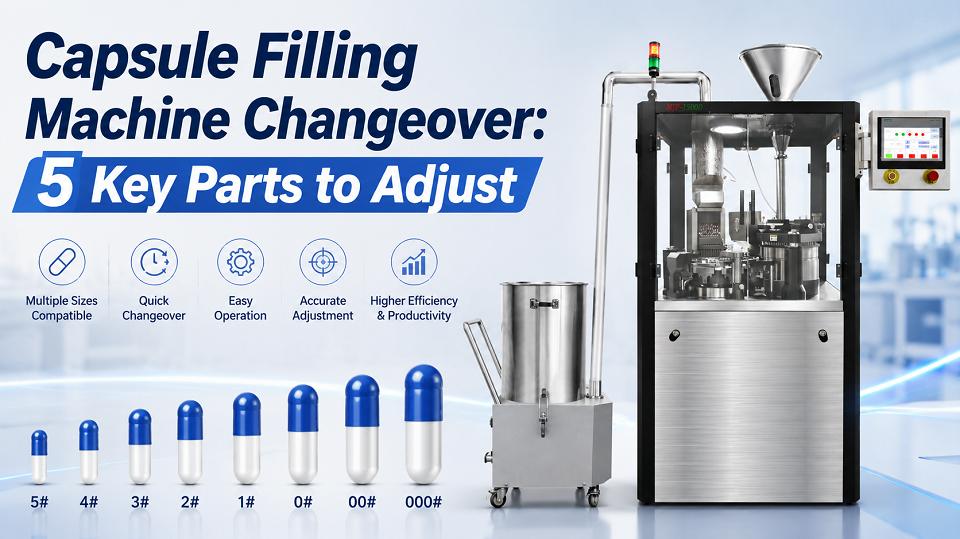
آلة تعبئة الكبسولاتيُعدّ تغيير الإنتاج عملية روتينية لشركات تصنيع الأدوية المتعددةأحجام الكبسولاتيمكن لنظام تغيير مصمم جيدًا أن يجعل هذه العملية أسهل بكثير. فبدلاً من إضاعة وقت طويل في عمليات التفكيك والتعديل المعقدة، يمكن للمشغلين التركيز على عدد محدود من المكونات الرئيسية وإتمام عملية التغيير بكفاءة.
تشرح هذه المقالة خمسة أجزاء رئيسية متضمنة في تغيير حجم الكبسولة، والتحديات الشائعة أثناء عمليات التغيير التقليدية، وكيف تم تصميم آلتنا لجعل العملية أسرع وأكثر دقة.
في إنتاج الكبسولات، قد تتطلب المنتجات المختلفة أحجامًا مختلفة للكبسولات بناءً على تركيبتها وكثافة مسحوقها وحجم تعبئتها. بالنسبة للمصنعين الذين يتعاملون مع منتجات متنوعة، فإن القدرة على إنتاج مواصفات متعددة للكبسولات على نفس الآلة توفر مرونة إنتاجية أكبر. يهدف هذا الجزء إلى استعراض أحجام الكبسولات العامة التي يمكن لآلة تعبئة الكبسولات التعامل معها وفوائدها للمصنعين.
تتوفر الكبسولات بأحجام قياسية مختلفة لتناسب تركيبات دوائية متنوعة، ومتطلبات جرعات مختلفة، وأحجام تعبئة مختلفة. بالنسبة للكبسولات الصلبة، تتراوح الأحجام الشائعة من 000# إلى 5#، حيث يمثل 000# أكبر حجم و5# أصغر حجم ضمن نطاق الأحجام القياسية.
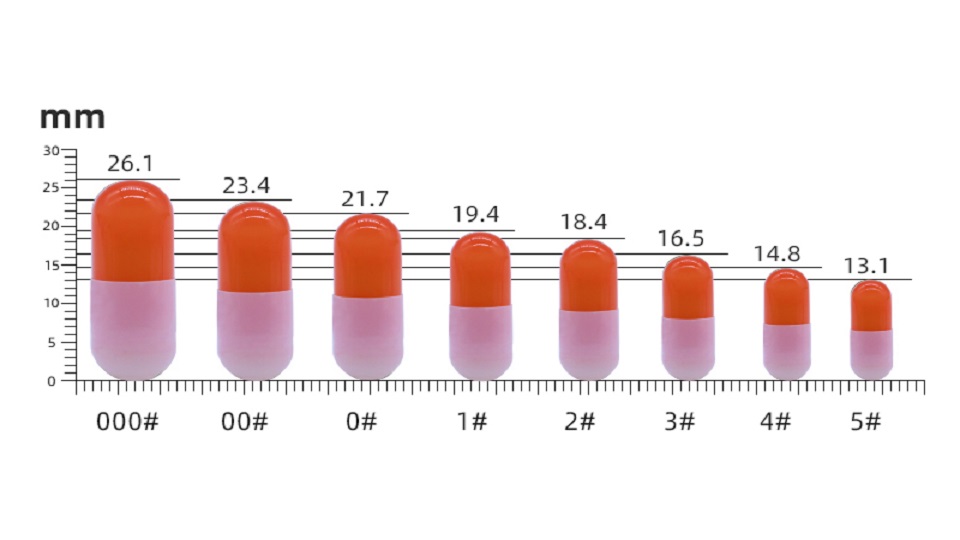 أحجام كبسولات مختلفة
يمكن تهيئة آلة تعبئة الكبسولات ذات نطاق الأحجام الواسع للتعامل مع مواصفات كبسولات متعددة، من 000# إلى 5#، عن طريق تغيير الأجزاء المناسبة وإجراء التعديلات اللازمة. يجب أن تتوافق المكونات التي تقوم بوضع الكبسولات وفصلها وتعبئتها وتفريغها مباشرةً مع حجم الكبسولة المُختار.
|
حجم الكبسولة |
الطول التقريبي (عند الإغلاق) |
الحجم التقريبي |
|
٠٠٠# |
26.1 ملم |
1.37 مل |
|
٠٠# |
23.4 ملم |
0.95 مل |
|
0# |
21.7 ملم |
0.68 مل |
|
1# |
19.4 ملم |
0.50 مل |
|
2# |
18.4 ملم |
0.37 مل |
|
3# |
16.5 ملم |
0.30 مل |
|
4# |
14.8 ملم |
0.21 مل |
|
5# |
13.1 ملم |
0.13 مل |
تتيح القدرة على إنتاج أحجام متعددة من الكبسولات على آلة تعبئة كبسولات واحدة للمصنعين مرونة أكبر في الإنتاج.
إنتاج منتجات متعددة على آلة واحدة.
قد تتطلب المنتجات الصيدلانية والغذائية ومنتجات الرعاية الصحية المختلفة أحجامًا مختلفة للكبسولات تبعًا للجرعة والتركيبة ومتطلبات المنتج. تتيح آلة تعبئة الكبسولات متعددة الأحجام للمصنعين، وخاصة شركات تطوير وتصنيع الأدوية التعاقدية، التعامل مع منتجات مختلفة باستخدام آلة تعبئة واحدة.
تقليل الاستثمار في المعدات.
تُقلل آلة تعبئة الكبسولات القادرة على التعامل مع أحجام متعددة من الحاجة إلى معدات إنتاج إضافية، كما تُساعد المصنّعين على الاستخدام الأمثل لمساحة أرضية الإنتاج المحدودة.
تحسين مرونة الإنتاج.
يمكن للمصنعين الذين ينتجون منتجات متعددة أو أحجام دفعات مختلفة التبديل بين مواصفات الكبسولات وفقًا لجدول الإنتاج الخاص بهم.
مع ذلك، فإن التوافق مع أحجام الكبسولات المتعددة ليس سوى جزء واحد من المعادلة. فكفاءة عملية التغيير لا تقل أهمية. إذا تطلب تغيير أحجام الكبسولات إجراءات معقدة وفترات توقف طويلة، فقد تُفقد بعض المرونة المكتسبة من توافق حشو الكبسولات.
على الرغم من أن آلة تعبئة الكبسولات الواحدة قادرة على التعامل مع أحجام متعددة من الكبسولات، إلا أنه لا يمكن تغييرها ببساطة عن طريق تغيير إعداد على لوحة التحكم. يجب مطابقة المكونات الميكانيكية المستخدمة مع مواصفات الكبسولة الجديدة.
يهدف هذا الجزء إلى تقديم خمسة أجزاء رئيسية يجب استبدالها أثناء تغيير آلة تعبئة الكبسولات، وشرح من أين تأتي التحديات الرئيسية للتغيير التقليدي ولماذا يعد تصميم التغيير السهل مهمًا لكفاءة الإنتاج.
عند تغيير حجم الكبسولة من حجم إلى آخر، يجب تعديل آلة تعبئة الكبسولات في خمسة أجزاء رئيسية: محطة تغذية الكبسولات، والقوالب العلوية والسفلية، وقرص الجرعات، وكاشطة المسحوق، وقضبان التعبئة، ومحطة تفريغ الكبسولات.
تتولى محطة تغذية الكبسولات مسؤولية توجيه الكبسولات الفارغة ومعالجتها في القوالب العلوية والسفلية. تختلف الكبسولات في أقطارها وأطوالها، لذا يجب أن تتناسب أبعاد مشط زرع الكبسولات ولوح التدوير وجهاز التثبيت مع أبعاد المنتج المُختار.
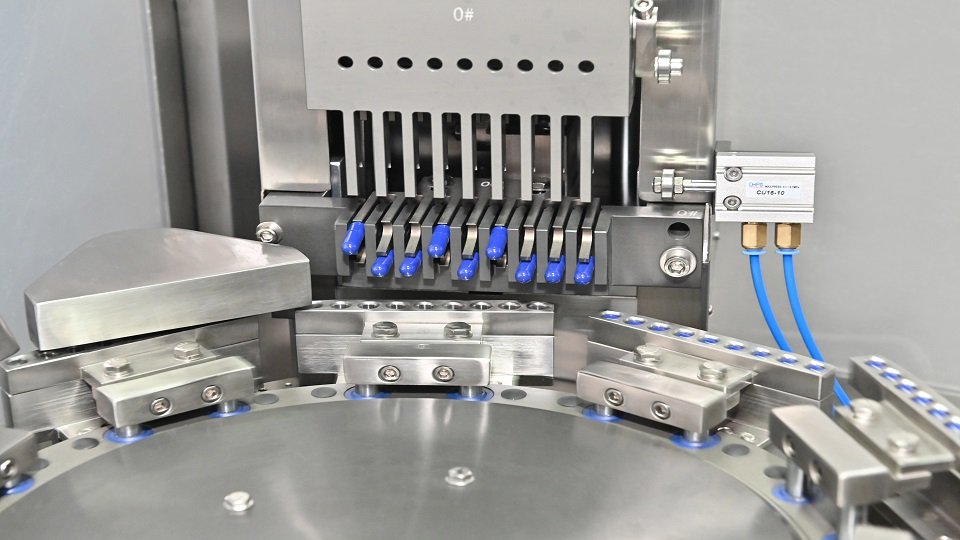 محطة تغذية الكبسولات
تُستخدم القوالب العلوية والسفلية لتثبيت أجسام الكبسولات وأغطيتها على التوالي أثناء عمليات الفصل وتعبئة المسحوق والإغلاق. ونظرًا لاختلاف الأبعاد الخارجية للكبسولات باختلاف أحجامها، يجب أن تتوافق تجاويف القوالب مع مواصفات الكبسولات. وينبغي تغيير القوالب لضمان وضع الكبسولات في الموضع الصحيح أثناء التشغيل.
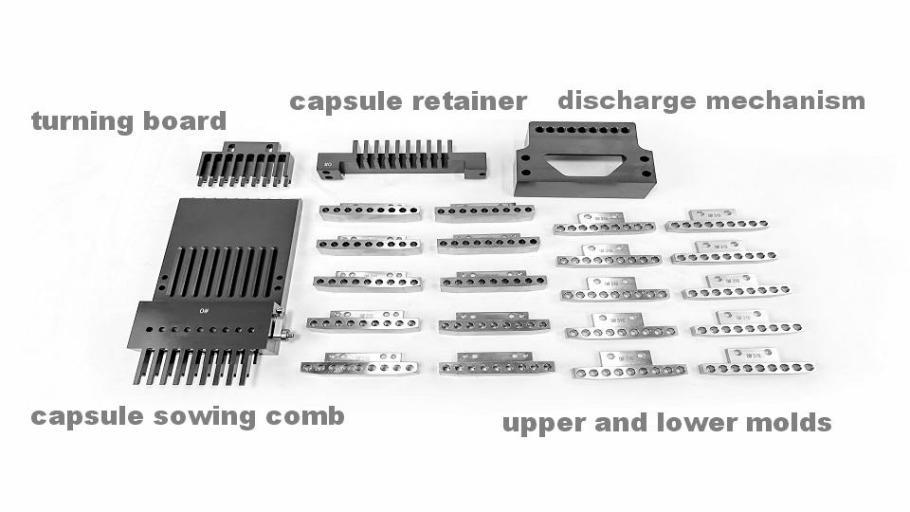 جزء من قوالب آلة تعبئة الكبسولات
يُعد قرص الجرعات أحد أهم المكونات التي تؤثر على المسحوقوزن الحشوأثناء التشغيل، يتراكم المسحوق ويُضغط في قرص الجرعات لتشكيل سدادة المسحوق المطلوبة قبل نقله إلى جسم الكبسولة. ونظرًا لاختلاف الأحجام الداخلية للكبسولات، يجب مطابقة قرص الجرعات مع المواصفات المطلوبة. يعمل مكشط المسحوق بالتنسيق مع نظام الجرعات للتحكم في طبقة المسحوق على قرص الجرعات والحفاظ عليها. كما يجب ضبط موضعه بدقة لضمان استقرار الجرعات.
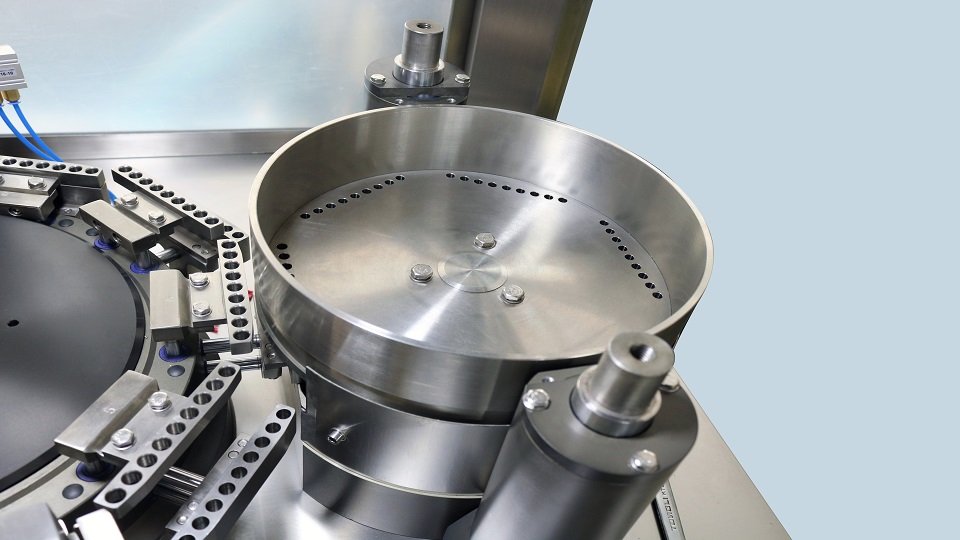 قرص الجرعات
The filling rods compress the powder within the dosing disc and help form the powder plug that is subsequently transferred into the capsule body. Different capsule sizes require corresponding filling components to ensure that the powder plugs are properly formed and transferred. Therefore, the filling rods need to be changed during capsule filler changeover.
After filling and capsule locking, finished products are discharged from the capsule filling machine. The discharge mechanism needs to accommodate the dimensions of the finished capsule. Its position therefore needs to be adjusted according to the capsule size to ensure smooth discharge.
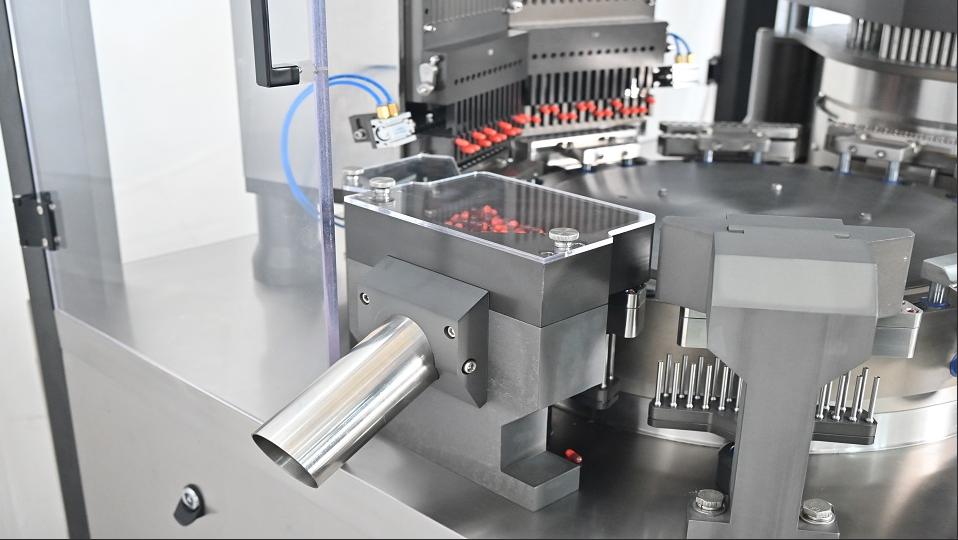 Discharge station
Although changing capsule sizes is a standard operation, poorly designed changeover procedures of capsule filling machine can create considerable inconvenience for operators. Here are some common problems with traditional capsule filling machine changeover.
Long changeover time
Multiple format parts need to be removed, replaced, and adjusted. If every step requires complicated disassembly, the machine may remain idle for an extended period. Long downtime could significantly affect production capacity and stability.
Difficult alignment
After replacing components, their positions need to be accurately aligned. If alignment is time-consuming or relies heavily on operator experience, the changeover process becomes less efficient. What’s more, misalignment can cause inaccurate filling weight and even machine shutdown.
Repeated adjustment
Even after installing the correct format parts, operators may need to fine-tune their positions. Without convenient adjustment mechanisms, this can make the changeover process of capsule filling machine unnecessarily complicated.
These issues are particularly noticeable for manufacturers producing multiple products or frequently switching between capsule specifications.
For manufacturers with frequent product changes,changeover timeis directly related to production efficiency.
A shorter and more convenient changeover process can:
Therefore, when evaluating a capsule filling machine, manufacturers should consider not only product compatibility, but also how easily the machine can change between them.
Our capsule filling machine features modular design, making the key changeover parts quick and easy to replace. The operations are straightforward, reducing both changeover time and operational complexity. This allows manufacturers, especially CDMO, to switch between different products more efficiently, minimizing downtime and enabling faster production changeovers.
To switch capsule feeding station during changeover of our capsule filling machine, first you only need loosen the fixing screws and orderly remove the capsule sowing comb, capsule retainer and turning board. Then install the corresponding capsule retainer, turning board and capsule sowing comb for the new capsule size in sequence.
After installation, the key issue is not simply whether the components are securely fixed, but whether they are accurately aligned with each other and the molds. Therefore testing rods are provided for right positioning between capsule retainer and upper and lower molds below it. This reduces reliance on visual judgment and makes the positioning process more repeatable and operator-friendly.
The upper and lower molds are another critical group of components that must be changed when switching products. During capsule filler changeover, remove the existing upper and lower molds and install the mold set corresponding to the new capsule size.
Firstly install lower molds with screws, and then upper molds. In the whole process, alignment is of the ultimate importance. If the molds are not correctly aligned, the capsule may not be positioned properly during operation, which can affect capsule feeding and locking, and increase the risk of filling inaccuracy as well as mechanical interference.
Our machine provides high precision testing rods to assist mold alignment. During installation, two testing rods are placed each side of upper and lower molds. Then, rotate the rods while adjusting the position of the upper mold. The operator can judge the alignment by checking the tightness and resistance when turning the testing rods. If the upper mold is not correctly positioned, the rods may be difficult to turn or experience excessive resistance.
Continue fine-tuning the upper mold position until the calibration rods can move up and down smoothly without being stuck or excessively tight. Once the alignment is confirmed, tighten the fixing screws to secure the upper mold in the correct position.
This calibration method provides a clear physical reference for mold alignment, making the adjustment more accurate and easier for operators to perform. This turns what could otherwise be a time-consuming trial-and-error adjustment into a more controlled positioning process.
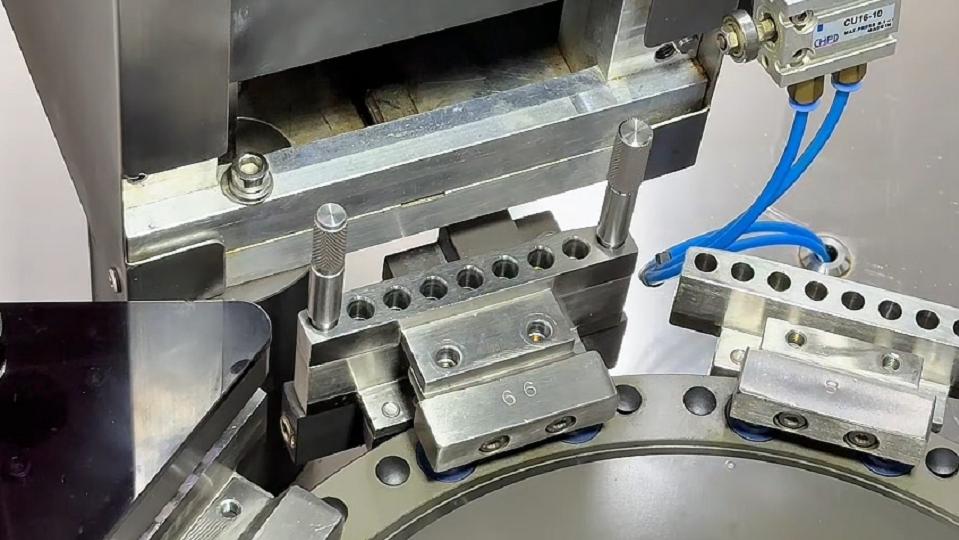 Install upper and lower molds with testing rods
During changeover of capsule filling machine, dosing disc and powder scraper of filling station should be replaced, which involves calibration adjustment after replacement.
To simplify this process and reduce material leakage, filling station of our capsule filler is equipped with a multi-dimensional adjustment mechanism, allowing the dosing disc to be adjusted in multiple directions. Also, with feeler gauge, the gap between dosing disc and copper plate can be precisely adjusted.
The powder scraper is also changed or adjusted accordingly to ensure that the powder is properly distributed and leveled across the dosing area.
What’s more, since the dosing disc directly influences the powder filling volume, different production requirements may call for different dosing configurations. Therefore, we provide dosing discs in not only different sizes, but also different thicknesses.
This gives customers greater flexibility when configuring the machine for different capsules and powder filling requirements, rather than limiting the changeover to capsule-size matching alone.
Filling rod replacement is another important step in capsule size changeover. In traditional capsule filling machines, filling rods are often removed and replaced one by one. When a complete set of filling rods needs to be changed, this process can be time-consuming. In addition, the height of each filling rod needs to be adjusted accurately, making it difficult to achieve consistent positioning and increasing the operator’s workload.
To make this process faster and easier, our machine uses pull-out slot filling rod holder. Instead of replacing the filling rods individually, the holder can securely clamp a complete set of filling rods, allowing the entire set to be removed and replaced as one unit. This significantly simplifies the changeover process and reduces the time required for filling rod replacement.
The filling station is also equipped with clear calibrations, providing a direct reference for height adjustment of filling rods.
By combining the set-based filling rod replacement design with clear height graduations, our machine makes both replacement and height adjustment faster, easier, and more precise, helping maintain consistent filling weight during production.
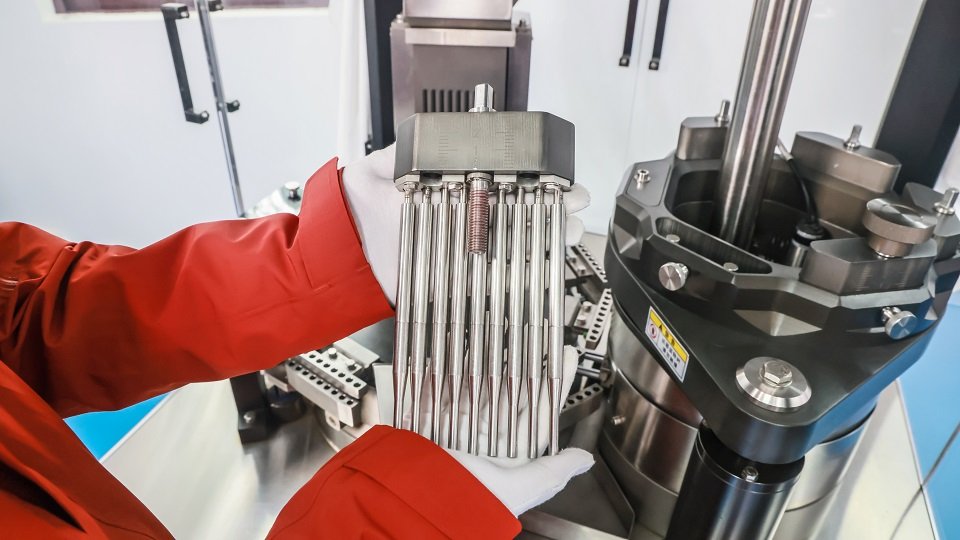 Pull-out slot filling rod holder
The final part to replace is the capsule discharge station. After filling and capsule closing, the finished capsules need to be transferred out of the machine smoothly. Since different capsule specifications have different dimensions, the discharge mechanism needs to be positioned accordingly.
Simply adjusting the corresponding screws to switch discharge mechanism for the new capsule specification is enough. Also, it is important to check whether the discharge port in alignment with the capsule ejection pin.
بالنسبة للمصنّعين الذين ينتجون كبسولات بمواصفات متعددة، وخاصةً المصنّعين المتعاقدين، تُعدّ آلة تعبئة الكبسولات متعددة الأحجام بالغة الأهمية. فإمكانية التعامل مع أحجام مختلفة من الكبسولات على آلة واحدة تمنح المصنّعين مرونة أكبر لتلبية متطلبات الإنتاج المتنوعة وطلبات العملاء.
مع ذلك، فإن التوافق ليس سوى نقطة البداية. بالنسبة لآلات تعبئة الكبسولات التي تُبدّل أحجام الكبسولات بشكل متكرر، فإن الوقت اللازم للتغيير وصعوبة التشغيل قد يكون لهما تأثير أكبر على الإنتاج. فالتغيير المعقد يعني توقفًا أطول للآلة، بينما قد تؤدي التعديلات المتكررة والمستهلكة للوقت إلى تقليل كفاءة الإنتاج الإجمالية والتأثير على استدامته.
مع وضع نقاط الألم هذه لدى العملاء في الاعتبار، صممت شركة Rich Packing آلة تعبئة الكبسولات بهيكل معياري وموجه نحو التغيير لجعل استبدال وتعديل الأجزاء الخمسة الرئيسية للتغيير أسرع وأبسط وأكثر دقة.
تساعد آلتنا العملاء على تقليل وقت تغيير العمليات، وتخفيف صعوبة التشغيل، والعودة إلى الإنتاج بشكل أسرع. وهذا يوفر أساسًا عمليًا لإنتاج مستقر ومستمر، لا سيما للمصنعين الذين يتعاملون مع مواصفات متعددة للكبسولات.
تغيير سريع لآلة تعبئة الكبسولات من شركة ريتش باكينج
المكونات الرئيسية لعملية التغيير هي محطة تغذية الكبسولات، والقوالب العلوية والسفلية، وقرص الجرعات، وكاشطة المسحوق، وقضبان التعبئة، ومحطة تفريغ الكبسولات.
يرتبط قرص الجرعات ارتباطًا مباشرًا بحجم تعبئة المسحوق. قد تتطلب مواصفات الكبسولات المختلفة ومتطلبات التعبئة تكوينات مختلفة لأقراص الجرعات. لذلك، ينبغي اختيار أقراص الجرعات المناسبة وفقًا لحجم الكبسولة ومتطلبات التعبئة.
نعم. بالإضافة إلى أحجام أقراص الجرعات المختلفة، نوفر سماكات مختلفة لمنح المصنعين مرونة أكبر في تكوين نظام الجرعات وفقًا لمتطلبات التعبئة.
تُستخدم قضبان الاختبار أثناء تغيير محطة تغذية الكبسولات والقوالب العلوية والسفلية لمساعدة المشغلين في تحقيق تحديد دقيق للمواقع.
يتم استبدال قضبان التعبئة وفقًا لمواصفات الكبسولة. ويُستخدم حامل ذو فتحة قابلة للسحب لتسهيل عملية استبدال قضبان التعبئة وتسريع عملية التغيير.

29+ years in pharmaceutical machinery, covering capsule filling, tablet pressing, blister packaging, tablet and capsule counting, cartoning, GMP production, and overseas machine service.

بريد إلكتروني : manager@richpacking.cn
Building D, No. 226, Beishan Qiaotou Street, Haizhu District, Guangzhou City, Guangdong Province, China


 دعم شبكة IPv6