






 منزل، بيت
 منتجات
29+ years in pharmaceutical machinery, covering capsule filling, tablet pressing, blister packaging, tablet and capsule counting, cartoning, GMP production, and overseas machine service.

هل لاحظتَ يوماً أن الأقراص التي تتناولها قد تبدو مختلفة تماماً عن بعضها؟ بعضها أبيض، وبعضها الآخر أصفر، أو وردي، أو أزرق، أو أخضر، أو حتى بني. للوهلة الأولى، قد تبدو هذه الألوان مجرد اختيار تصميمي بسيط، ولكن غالباً ما يكون هناك ما هو أكثر من ذلك.
تُستخدم عملية تغليف الأقراص لأغراضٍ متعددة. ولكن كيف يتم اختيار لون التغليف؟ وكيف تُنتج آلة التغليف طبقةً ناعمةً ومتجانسةً ذات لونٍ موحد حول آلاف الأقراص؟ تستكشف هذه المقالة أسباب تغليف الأقراص، والعوامل المؤثرة في اختيار لون التغليف، وعملية التغليف الكاملة.
قبل مناقشة لون طلاء الأقراص، يهدف هذا الجزء إلى إلقاء نظرة سريعة على تعريف وأنواع طلاء الأقراص الرئيسية.
تغليف الأقراص هو عملية تصنيع دوائية يتم فيها تطبيق طبقة أو أكثر من مادة التغليف على سطح القرص. يُشار عادةً إلى القرص قبل التغليف بالقرص العادي. بعد إنتاج الأقراص بواسطةجهاز لوحي أو آلةيتم تحميلها فيآلة تغليف الأقراصحيث يتم تحريكها باستمرار وتعريضها لسائل طلاء.
تشمل مواد الطلاء الرئيسية مواد تشكيل الأغشية، والملونات، والملدنات، والمذيبات.
تُعدّ المواد المُشكّلة للغشاء أهمّ عنصر في تركيبة التغليف. وتتمثّل وظيفتها الأساسية في تكوين طبقة متصلة على سطح القرص. ويؤثّر نوع المادة المُختارة على خصائص مهمة كالمتانة والذوبان وسلوك إطلاق الدواء. ومن الأمثلة الشائعة على ذلك: هيدروكسي بروبيل ميثيل سليلوز (HPMC)، وهيدروكسي بروبيل سليلوز (HPC)، وبولي فينيل الكحول (PVA)، وبولي فينيل بيروليدون (PVP)، وإيثيل السليلوز، وبوليمرات حمض الميثاكريليك.
يمكن استخدام الملونات لإنتاج ألوان طلاء متنوعة مثل الأبيض والأصفر والوردي والأحمر والأزرق والأخضر والبرتقالي والبني. ويؤثر لون لب القرص، وسماكة الطلاء، ومدى تجانس توزيع الملون، على المظهر النهائي.
تُستخدم الملدنات لتحسين مرونة طبقة التغليف. فبدون مرونة كافية، قد تصبح طبقة التغليف هشة وتتشقق أو تتقشر أثناء عمليات التصنيع اللاحقة. تساعد الملدنات على الحفاظ على سلامة طبقة تغليف الأقراص. ومن الأمثلة الشائعة عليها: بولي إيثيلين جلايكول (PEG)، وسترات ثلاثي الإيثيل، وترياسيتين.
تُستخدم المذيبات لنقل مواد التغليف عبر نظام الرش إلى سطح القرص. يُستخدم الماء عادةً، ويمكن استخدام مذيبات أخرى مناسبة حسب التركيبة. خلال عملية تغليف الأقراص، تُزال المذيبات تدريجيًا بالتجفيف بالهواء الساخن. ثم تُشكّل المواد المتبقية طبقة التغليف النهائية.
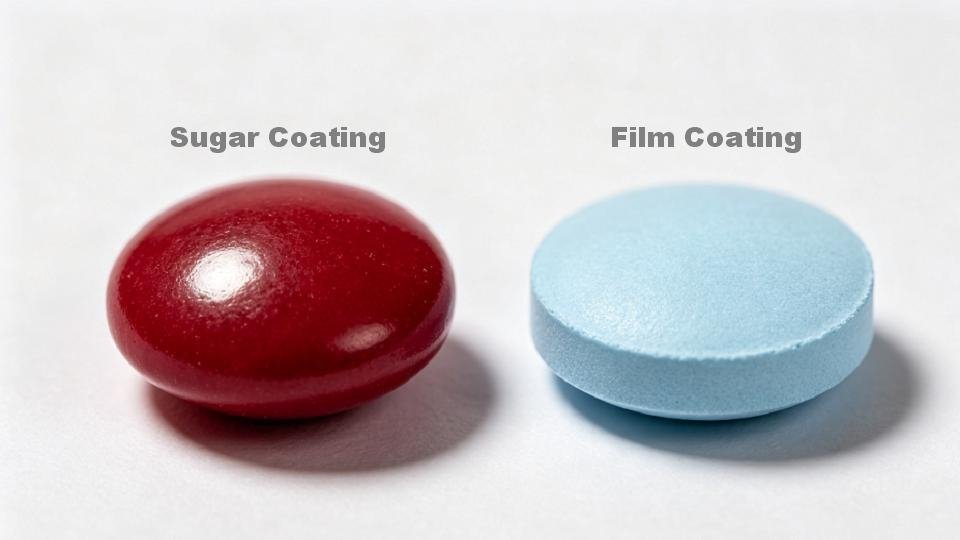
طلاء السكر وطلاء الفيلم
يُعدّ كلٌّ من التغليف بالفيلم والتغليف بالسكر نوعين رئيسيين من أنواع تغليف الأقراص.
تُعرف عملية التغليف بالأغشية الرقيقة بتطبيق طبقة رقيقة نسبياً من مادة تغليف بوليمرية على سطح القرص. ونظراً لرقة هذه الطبقة، فإن تأثيرها على حجم القرص ووزنه محدود عموماً، مما يجعلها طريقة تغليف شائعة الاستخدام في صناعة الأدوية.
على عكس التغليف بالأغشية الرقيقة، ينتج عن التغليف بالسكر عادةً طبقة خارجية أكثر سمكًا. كما أن الأقراص المغلفة بالسكر تكون عمومًا أكثر نعومة واستدارة، وغالبًا ما يكون سطحها لامعًا. يوفر التغليف بالسكر أيضًا إخفاءً ممتازًا للطعم، لأن الطبقة السميكة تُشكل حاجزًا قويًا بين لب القرص والفم.
| مقارنة | طلاء الفيلم | طبقة سكرية |
|---|---|---|
| بنية الطلاء | غشاء رقيق مصنوع من البوليمر | طلاء سميك متعدد الطبقات |
| المواد الرئيسية | البوليمرات المُشكِّلة للأغشية والمواد المساعدة الوظيفية | مواد طلاء أساسها السكر والمواد المساعدة ذات الصلة |
| التأثير على حجم الجهاز اللوحي | زيادة محدودة في الحجم والوزن | زيادة ملحوظة في الحجم والوزن |
| مظهر | ناعم ومتجانس؛ يمكن أن يكون لامعًا أو غير لامع | ناعمة، مستديرة، وعادةً ما تكون شديدة اللمعان |
| إخفاء الطعم | جيد، حسب التركيبة | ممتاز بشكل عام بسبب الطبقة السميكة |
| كفاءة الإنتاج | بشكل عام، أكثر كفاءة وملاءمة للإنتاج | يستغرق وقتاً أطول لأنه يتطلب طبقات متعددة |
| تعقيد العمليات | مبسطة نسبياً | أكثر تعقيدًا ويتضمن مراحل طلاء متعددة |
| التطبيقات النموذجية | الطلاءات الوظيفية والفيتامينات والمكملات الغذائية | إخفاء الطعم والمنتجات التي تتطلب مظهرًا تقليديًا لامعًا |
صُممت أنواع مختلفة من أغلفة الأقراص لحل مشاكل مختلفة. بعضها يهدف إلى التحكم في إطلاق الدواء، بينما يركز البعض الآخر على تحسين الخصائص الفيزيائية ومظهر القرص.
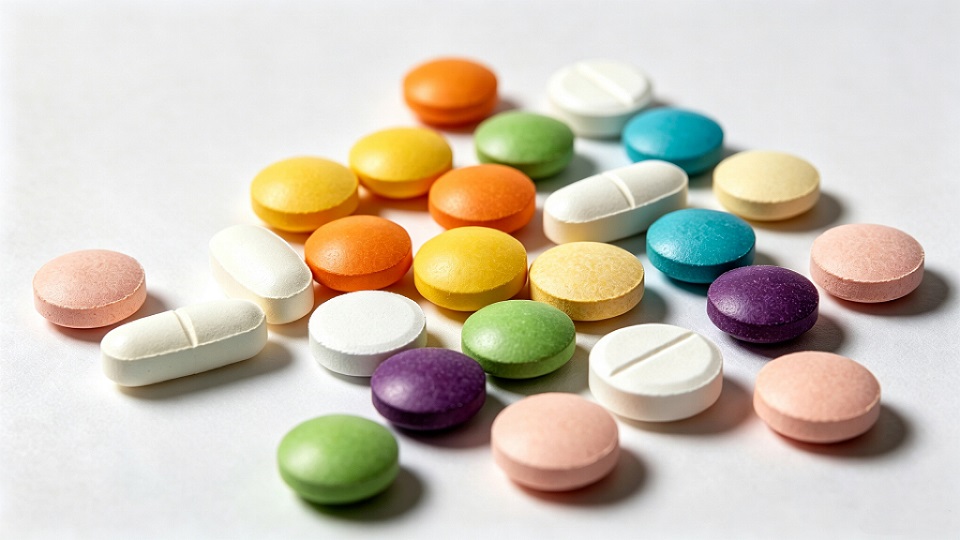
أجهزة لوحية بأحجام وألوان طلاء مختلفة
من أهم وظائف تغليف الأقراص التحكم في موضع إطلاق المادة الفعالة. عادةً ما يُصمّم القرص التقليدي سريع الإطلاق ليتفكك ويطلق مكوناته الفعالة بعد تناوله. مع ذلك، تتطلب بعض الأقراص آلية إطلاق أكثر تحديدًا، وهنا تبرز أهمية تغليف الأقراص.
على سبيل المثال، صُممت الأقراص المغلفة معوياً بحيث لا تؤثر في المعدة، بل تذوب فقط في الأمعاء. وقد تستخدم تركيبات أخرى أنظمة تغليف كجزء من تصميم الإطلاق المعدل. وبحسب التركيبة، يمكن أن يساعد التغليف في إبطاء أو تنظيم اختراق السوائل وإطلاق المادة الفعالة.
في هذه التطبيقات، يُعد غلاف الأقراص أكثر بكثير من مجرد طبقة خارجية زخرفية. فتركيبه وسماكته وتجانسه وسلامته يمكن أن تؤثر بشكل مباشر على الأداء المقصود للقرص.
قد يبدو ابتلاع القرص أمرًا بسيطًا، لكن سطح القرص يمكن أن يحدث فرقًا ملحوظًا في تجربة المريض.
قد يكون سطح الأقراص غير المغلفة خشنًا أو مسحوقيًا نسبيًا. وخلال عمليات التصنيع والتداول والتخزين، قد يتعرض السطح أيضًا لخدوش طفيفة. يمكن للطلاء المُطبق بشكل صحيح أن يُكوّن طبقة خارجية أكثر نعومة، مما يُسهّل حركة القرص عند البلع. وهذا مفيد بشكل خاص للأقراص الكبيرة التي يصعب على بعض المرضى تناولها.
كما أن تغليف الأقراص يُخفي الروائح الكريهة. فبعض المكونات الفعالة لها طعم مر قوي، أو رائحة كريهة، أو خصائص حسية أخرى قد تكون ملحوظة إذا بقي القرص في الفم قبل بلعه. ومن خلال إنشاء حاجز مادي، يُحسّن تغليف الأقراص تجربة تناول الدواء بشكل عام.
يلعب غلاف الأقراص أيضاً دوراً مهماً في المظهر الخارجي ومتانة المنتج النهائي.
يُضفي الطلاء على سطح القرص نعومةً ومظهراً جذاباً، كما يُساعد على إخفاء الاختلافات الطفيفة في شكل لبّ القرص. إضافةً إلى ذلك، يُوفّر هذا الطلاء حمايةً لسطح القرص أثناء عمليات التصنيع اللاحقة.
قد تمر الأقراص بمراحل متعددة بعد الضغط، بما في ذلك النقل والفحص.عد الأقراصتعبئة الأقراصتغليف الفقاعاتوالنقل. قد يؤدي التلامس المتكرر بين الأجهزة اللوحية وأسطح المعدات إلى تآكلها أو تلفها. يمكن أن يساعد الطلاء المناسب في تحسين مقاومة الاحتكاك الطفيف وأضرار المناولة، مما يساهم في الحصول على مظهر نهائي أكثر اتساقًا.
تشمل ألوان تغليف الأقراص الشائعة الأبيض والأصفر والوردي والأحمر والأزرق والأخضر والبرتقالي والبني. يُعدّ اللون الأبيض من أكثر الخيارات شيوعًا نظرًا لبساطته. كما يُستخدم اللون الأصفر بكثرة، بينما يُضفي الوردي والأزرق والأخضر تباينًا بصريًا أقوى. أما البرتقالي والبني، فيُستخدمان عندما يتطلب المنتج مظهرًا أكثر تميزًا. ويتم اختيار اللون النهائي عادةً بناءً على عدة اعتبارات عملية.
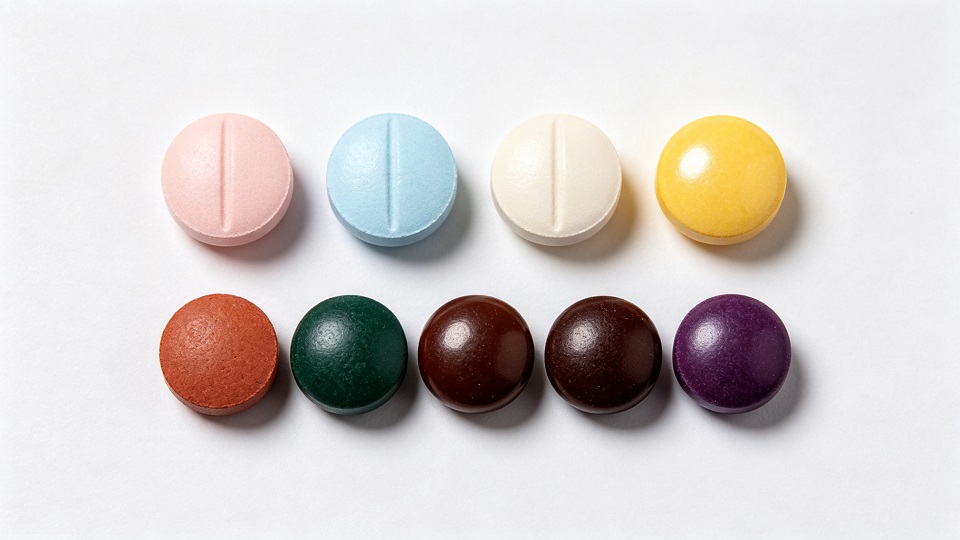
ألوان طلاء الأقراص المختلفة
أحد أسباب استخدام ألوان مختلفة لتغليف الأقراص هو تمييز المنتج. فقد ينتج مصنع الأدوية منتجات متعددة متشابهة في الحجم أو الشكل. كما قد تحتوي أقراص الدواء نفسه، بتركيزات مختلفة، على لبّ متطابق تقريبًا. يوفر اللون ميزة بصرية إضافية تساعد على التمييز بينها.
Color should not be considered the only means of identification, but it can work together with tablet shape, size, imprinting, packaging, and labeling to create a clearer visual distinction. From a product-design perspective, the goal is that the finished tablet should be recognizable and less likely to be confused with another product.
Color can also become part of a product's visual identity. Just as consumer products often use recognizable packaging colors, pharmaceutical and healthcare products may use consistent colors to create a recognizable appearance across a product line.
However, branding cannot be the only consideration. A color that looks attractive in a design concept must also be achievable in large-scale production. It must remain sufficiently consistent from batch to batch and work with the selected tablet core and coating formulation.
The choice of tablet coating color is also subject to regulatory requirements. The coloring agents used in pharmaceutical coatings are not selected solely on the basis of appearance. Manufacturers need to consider whether a particular colorant is permitted for pharmaceutical use in the target market.
Manufacturers also need to consider the quality requirements associated with the colorant. Depending on the applicable standards and product requirements, this may include factors such as identity, purity, impurities, and consistency.
The tablet color must also be compatible with the actual tablet coating process. Different colors and shades may place different demands on the coating process.
For example, highly saturated or darker colors may make uneven coating more noticeable, while some colorants may require particularly uniform dispersion to avoid spots or shade variation. The color of the tablet core and the amount of coating applied can also influence the final appearance.
For this reason, manufacturers need to consider whether the selected color can be reliably achieved under actual production conditions. Factors such as tablet movement, coating solution spraying, drying, and moisture removal all influence the consistency of the final color.
So, how does a tablet coating machine coordinate these processes to create a smooth and uniform coating? The next chapter is to take a closer look at the working principle of tablet coating machine.
To ensure a uniform coating and consistent tablet color, tablet coating machine takes coordinated control of tablet movement, coating solution spraying, heated air, and exhaust.
The coating process begins with the tablet tumbling. As the coating pan rotates, the tablets are continuously lifted, moved, and allowed to tumble. Internal baffles help create a controlled movement pattern so that the tablets do not simply slide together as one mass. The purpose of this movement is to expose different surfaces of the tablets to the spray zone.
If tablet movement is poor, some tablets may receive more coating than others, causing uneven coating and color inconsistency. On the other hand, excessively aggressive movement may increase the risk of unnecessary tablet-to-tablet contact or surface damage.
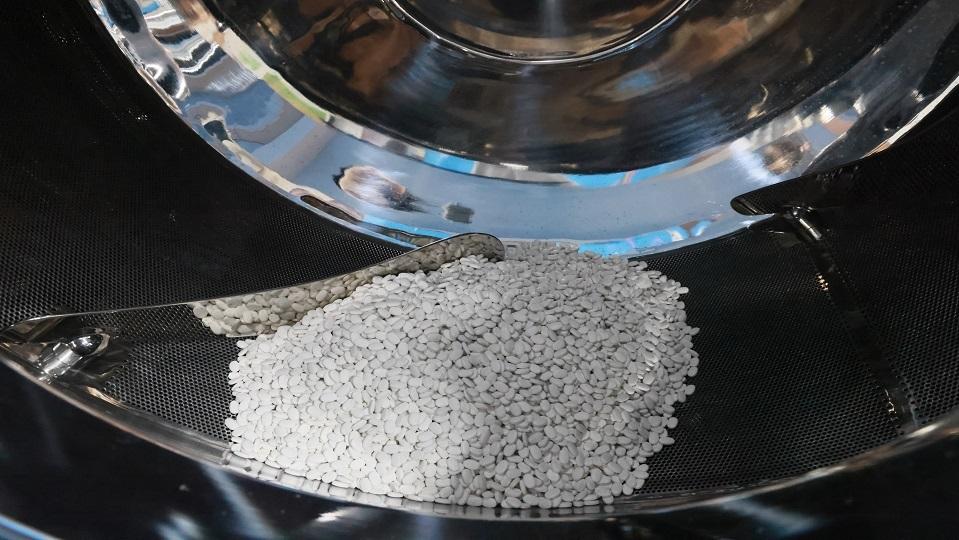
Tumbling and Mixing
Once the tablets are tumbling properly, the coating solution is delivered to the spray system. The coating liquid is atomized through spray guns into fine droplets and directed toward the moving tablet bed. Each tablet receives small amounts of coating as it repeatedly passes through the spray zone.
Uniform spraying depends on several factors, including the coating solution flow rate, atomization conditions, spray pattern, spray gun position, and the relationship between the spray system and the moving tablet bed.
If too much liquid is applied to a localized area, tablets can become excessively wet. In this case, tablet sticking and uneven coating might occur. If the droplets are not properly atomized or distributed, the final surface may show defects or color variation. Therefore, uniform spraying performance of tablet coating machine is particularly important for coating color consistency.
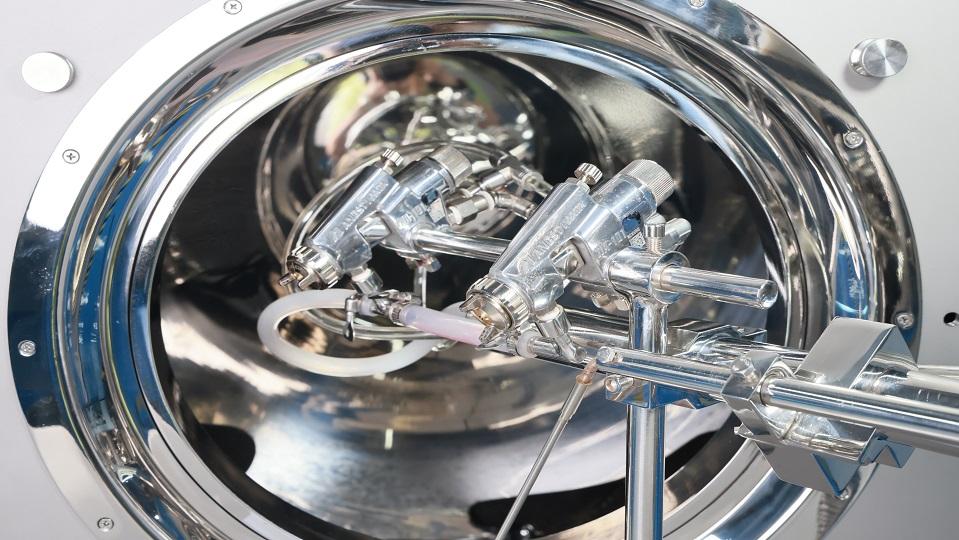
Spraying System
The liquid portion of the coating must be removed so that the coating material can form a stable film on the tablet surface. This is achieved through the hot-air system of tablet coating machine.
Conditioned air enters the coating chamber and passes through the moving tablet bed. The air can evaporate the solvent or water from the freshly applied coating of tablet.
The drying process must be carefully balanced with the spray process. If tablets remain too wet because the spray rate is too high or drying is insufficient, they may stick to one another. If drying is too aggressive, the coating droplets may dry too quickly before they have the opportunity to spread properly across the tablet surface.
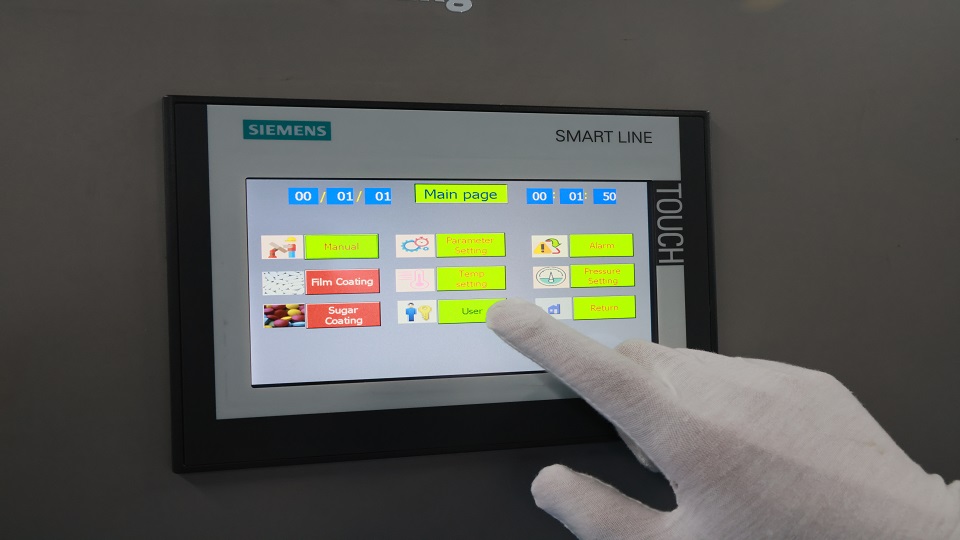
Siemens Touchscreen of rich packing’s Tablet Coating Machine
A complete tablet coating is normally built up gradually rather than applied in one thick layer. The process is repeated many times:
With each cycle, the coating gradually builds into a continuous film. This repeated process helps improve coating uniformity and allows the control system to manage the total amount of coating applied. The process continues until the required coating weight gain, film quality, and visual appearance have been achieved.
Once the tablet coating process is complete, the finished tablets can be discharged from the coating pan.
Before discharge, the coating pan is typically kept rotating for a short period to allow the remaining surface moisture to be removed and to ensure that the tablets are sufficiently dry. This helps prevent coated tablets from sticking together during discharge. Then the pan rotates in the designated direction, causing the tablets to move toward the discharge port. Internal baffles guide the tablets toward the outlet as the pan continues to rotate.
Once the coating pan is emptied, the discharge operation is stopped and the finished tablets are transferred to the next packaging stage, such as inspection, dedusting, tablet counting and blister packaging.
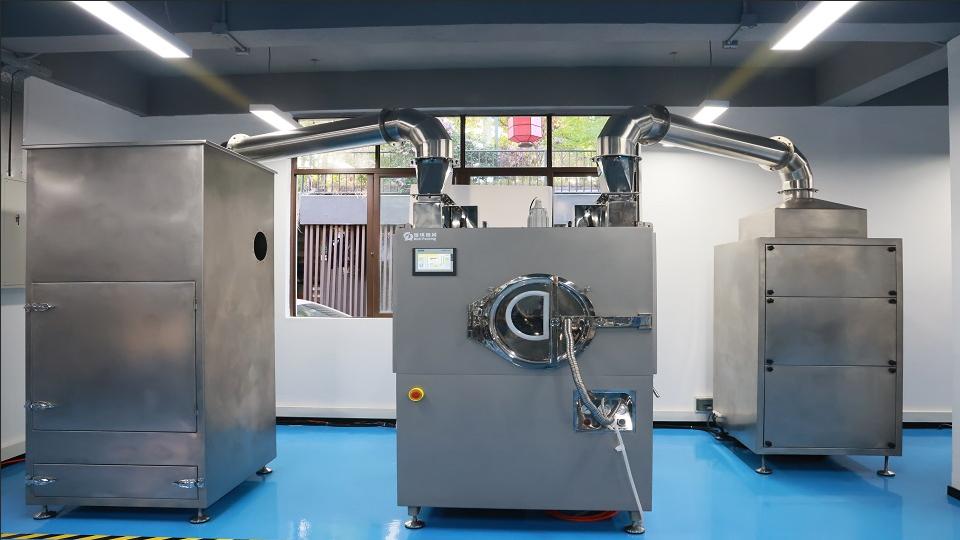
rich packing’s Tablet Coating Machine
Tablet coating serves multiple purposes, and the choice of coating color depends on several factors such as product identification, brand recognition, regulatory requirements, and the coating process to achieve a consistent result.
At the heart of this process is the tablet coating machine, which coordinates tablet tumbling, coating solution spraying, and hot-air drying to form a uniform and consistent coating layer. Therefore, selecting a tablet coating machine that matches the product and production requirements is essential for achieving stable coating quality.
Equally important is choosing an experienced and reliable supplier. A professional supplier should not only provide suitable tablet coating machine, but also offer technical guidance on coating formulation and color selection, and help optimize key process parameters. Rich Packing, as a reliable supplier, remains ready to give clients customized and professional tablet coating solution.
Working Process of rich packing’s Tablet Coating Machine
Different tablet coating colors can help improve tablet identification, distinguish products or strengths, and support brand recognition.
No. Tablet coating can also help control where the active ingredient is released, improve swallowability, mask unpleasant tastes and odors, and improve the tablet's resistance to minor abrasion during downstream handling.
تشمل العوامل الرئيسية تحديد هوية الأقراص، والتعرف على العلامة التجارية، والمتطلبات التنظيمية، وما إذا كان من الممكن تحقيق اللون المحدد باستمرار أثناء عملية تغليف الأقراص الفعلية.
نعم. عوامل مثل حركة القرص، ورش محلول الطلاء، والتجفيف، وإزالة الرطوبة، ولون لب القرص، وكمية الطلاء، كلها يمكن أن تؤثر على تجانس اللون والمظهر النهائي للقرص.
تقوم آلة طلاء الأقراص بتنسيق تقليب الأقراص، ورش محلول الطلاء، والتجفيف بالهواء الساخن، ودورات الطلاء المتكررة لبناء طبقة طلاء موحدة تدريجياً على سطح القرص.

29+ years in pharmaceutical machinery, covering capsule filling, tablet pressing, blister packaging, tablet and capsule counting, cartoning, GMP production, and overseas machine service.

بريد إلكتروني : manager@richpacking.cn
Building D, No. 226, Beishan Qiaotou Street, Haizhu District, Guangzhou City, Guangdong Province, China


 دعم شبكة IPv6